Noise-Cancelling Headphones on a Plane: A Practical Guide
How-toHeadphones & Audio
Noise-Cancelling Headphones on a Plane: A Practical Guide
How to get the most from active cancellation in the one environment it was designed for, and what it will never do.
Published
· Last reviewed
· 7 min read
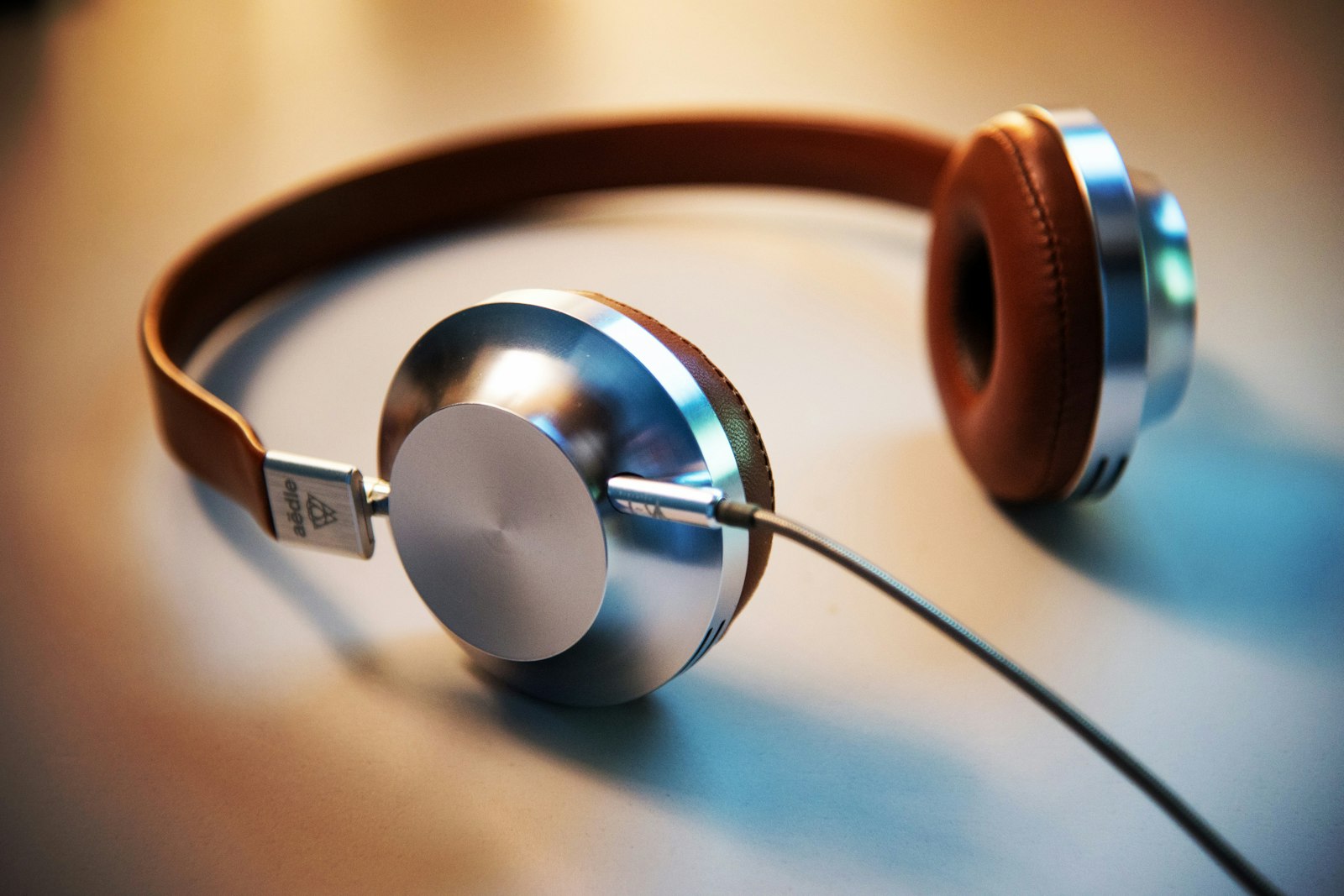
Photograph
An aircraft cabin is the environment active noise cancellation was designed for: a continuous, low-frequency roar with almost no high-frequency variation. In that one setting, the technology performs as well as it ever does anywhere.
The short answer: fit the headphones properly, use cancellation on the engine drone, keep the wired cable and an airline adapter with you, and do not expect it to silence speech.
Why a cabin is the ideal case
Aircraft engines produce a broadband roar concentrated at low frequencies, and the airframe adds a steady rush of airflow. There is very little sudden, high-frequency sound in a cruise cabin.
That matches the mechanism of active cancellation exactly. Microphones sample the noise, a processor inverts the waveform, and the headphones play it back. Because the engine noise is predictable and steady, the inversion cancels it well.
What cancellation does not handle is speech, cutlery, a dropped tray, or a child. Those are not the frequency range or the predictability the system is built for. Expecting them to disappear leads to disappointment with a technology that is working correctly.
Before the flight
Four things worth doing at home rather than at the gate.
1. Confirm the passive wired mode works
Check that the headphones play over the 3.5mm cable with the electronics powered off. Not every model does — some have no analogue path at all. On a long flight, a dead battery should be an inconvenience rather than the end of your audio.
Test this at home by switching the headphones off and plugging in the cable.
2. Pack an airline adapter
Many aircraft use a two-prong socket that a standard 3.5mm plug does not fit. An airline adapter costs a few dollars and makes the wired mode usable on the seat’s entertainment system.
3. Charge overnight, and confirm the quick-charge figure
Note the manufacturer’s quick-charge specification — often a few hours of playback from a short charge. Knowing this turns a dead battery into a fifteen-minute problem.
4. Update the firmware
Headphones often ship with older firmware, and updates commonly improve cancellation algorithms and connection stability. Do this before you travel, not with airport Wi-Fi.
Getting the fit right, which decides most of the result
This is where the real gains are, and it is not a specification anyone can sell you.
Over-ear: the earcup must seal against the head, not rest on the ear. Adjust the headband so the cups sit flat around the ears with no gap at the top or bottom. Hair, glasses temples and hats all create leaks, and a leak lets noise straight past the seal.
In-ear: there is no universal tip. Try every size the box includes and pick the one that seals without pressure. A correct seal is worth more than any specification difference between models.
Test before you fly. Wear them somewhere genuinely loud — a train, a bus, a busy street — so you know the seal is right before a seven-hour flight rather than discovering a leak at altitude.
On board
Use cancellation for the cruise, not for everything. Gate announcements and crew instructions matter, so switch cancellation off when they are happening — or at least know how to switch it off quickly, since finding the button under a blanket is harder than it sounds.
Set the volume modestly. The reason headphones help on a plane is that they let you listen at a lower volume than you would need to overcome the cabin noise. Cancellation does that work. Turning the volume up because it feels quiet undoes the benefit and is the main hearing risk in this whole scenario.
Use the wired connection if the battery gets low, and keep the adapter accessible rather than in the overhead bin.
Consider the noise floor. With cancellation on and no audio playing, a quiet hiss or a slight pressure sensation is normal and varies between people. If it bothers you, keep a quiet audio track playing instead of silence.
What to expect, honestly
Sound
Cancellation performance
Engine roar
Substantially reduced — this is the designed case
Air conditioning
Reduced
Airflow rush
Reduced
Conversation
Barely affected
A baby crying
Not affected
Cutlery and announcements
Not affected
After the flight
Two habits that keep the headphones performing on the next trip:
Wipe the earcups and the seal surfaces. Oils from skin and hair degrade the pad material and, more immediately, can reduce the seal. A wipe down after a long flight keeps the isolation working.
Check for pad wear. Compressed or cracked pads no longer seal, and a poor seal removes most of the benefit regardless of how good the electronics are. Replacement pads are inexpensive and are the highest-value maintenance item in this category — a headphone with worn pads is a quieter-but-leaky headphone, not a quieter-cabin one.
Store them in the case, since the frame and the hinges are the parts that break, and the case exists specifically to prevent that.
What will improve your flight more than any headphone
Worth stating because it is true: a good seal on a modest pair beats a poor seal on an expensive one. Spend the time on fit and on pads, and the specification difference between two mid-range models will matter far less than you expect.
Products referenced
Products mentioned in this article
Every outbound link is labelled. Where a link carries no tracking parameter, we
say so rather than implying a commission.
This link points to the manufacturer. No tracking parameter is attached, so we earn nothing from it today.
How this article was written. NovoltGear works from published
manufacturer specifications, standards documentation and the physics that govern how
the hardware behaves. We do not claim hands-on laboratory testing, and where a claim
would require measurement we have not taken, we describe the mechanism and link the
primary source instead. Prices change constantly, so we never quote one as fixed.
Read the full editorial policy.
One email a month, and only when we have something worth saying
New buying guides, price-drop notes and corrections to anything we got wrong. We do not
sell addresses and there is nothing to unsubscribe from by stealth.
Cookies. NovoltGear sets no advertising cookies and runs no analytics. We store
one thing in your browser: a flag remembering that you have read this notice. When you follow a
link from this site to a retailer, that retailer sets its own cookies, so they can credit
a purchase. Read the cookie notice.